The Cambrian Explosion remains one of the most enigmatic events in the history of life on Earth. Approximately 541 million years ago, the fossil record reveals an astonishing burst of biological diversity, with most major animal phyla appearing in a relatively short geological span. Traditional evolutionary theories struggle to fully explain this rapid emergence of complex life forms. However, a provocative new hypothesis suggests that quantum mechanics may have played a role in this biological revolution.
The Quantum Enigma of Life's Big Bang
For decades, scientists have debated the triggers behind the Cambrian Explosion. Was it rising oxygen levels? Geological changes? Or perhaps the emergence of predator-prey relationships? While these factors likely contributed, they don't completely account for the speed and scale of evolutionary innovation during this period. Some researchers now propose that quantum biological processes could provide the missing piece to this ancient puzzle.
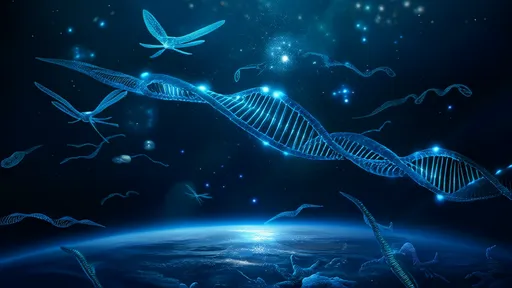
At the heart of this theory lies the idea that quantum effects, which typically dominate the subatomic world, might have influenced biological systems in ways that accelerated evolutionary change. Quantum coherence, tunneling, and entanglement - phenomena usually associated with physics laboratories - could have played unexpected roles in early organisms' biochemistry and genetic processes.
Quantum Biology Meets Paleontology
The emerging field of quantum biology has already demonstrated that nature exploits quantum mechanics in surprising ways. Photosynthesis, bird migration, and even our sense of smell appear to utilize quantum effects. If these processes exist in modern organisms, could they have been present - and perhaps more pronounced - in early Cambrian life forms?
Some researchers speculate that the simpler cellular structures of early organisms might have been more susceptible to quantum influences. Without the sophisticated error-correction mechanisms found in modern cells, primitive biological systems might have experienced higher rates of quantum-assisted mutations. This could have led to an explosion of genetic experimentation and, consequently, rapid morphological diversification.
The Environment of the Cambrian
The Earth during the Cambrian period presented unique conditions that might have favored quantum biological effects. The planet's magnetic field was weaker, potentially allowing more cosmic radiation to reach the surface. Some theorists suggest this increased radiation could have enhanced quantum coherence in biological molecules or created more frequent quantum-induced mutations.
Additionally, the chemistry of early Cambrian seas might have supported quantum phenomena. Certain minerals present in abundance at that time are now known to facilitate quantum processes. If these minerals interacted with organic molecules, they could have created quantum bridges that accelerated molecular evolution or enabled novel biochemical pathways.
Quantum Vision and the Predator Effect
One particularly intriguing application of quantum biology to the Cambrian mystery involves the evolution of vision. The development of eyes is considered a key driver of the Cambrian Explosion, as it initiated an evolutionary arms race between predators and prey. Some researchers propose that the first light-sensitive cells might have utilized quantum effects to enhance their sensitivity to photons.
If early visual systems employed quantum coherence to detect light more efficiently, this could explain how complex eyes evolved so rapidly. The quantum advantage in vision would have provided an immediate selective pressure, forcing other organisms to develop better sensory systems or defensive adaptations - accelerating evolutionary change across multiple lineages simultaneously.
Challenges to the Quantum Hypothesis
While fascinating, the quantum explanation for the Cambrian Explosion faces significant skepticism. Many biologists argue that quantum effects are too fragile to persist in warm, wet biological systems over meaningful timescales. The "decoherence" problem suggests that quantum states in complex molecules would collapse almost instantly under normal cellular conditions.
Moreover, the fossil record, while showing rapid diversification, still operates on timescales of millions of years - far slower than typical quantum processes. Critics question whether quantum phenomena could sustain their influence over geological time periods or whether they would simply average out to classical behavior at macro scales.
Future Directions in Quantum Paleobiology
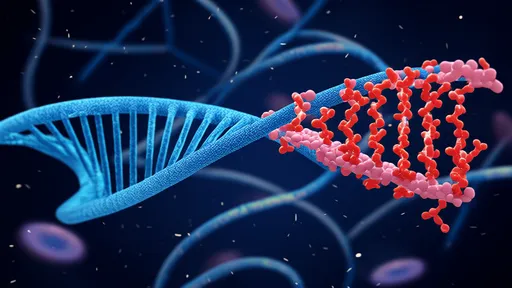
Despite these challenges, research continues at the intersection of quantum physics and evolutionary biology. New experimental techniques are allowing scientists to test quantum effects in biological systems under conditions that might mimic early Earth environments. Some laboratories are investigating whether quantum processes could influence gene expression or protein folding in ways that might accelerate evolutionary change.
Other researchers are examining Cambrian-era minerals for evidence of quantum-enhanced catalysis that could have facilitated prebiotic chemistry. If these investigations yield positive results, they might support the idea that quantum mechanics played a role in life's greatest diversification event.
The quantum explanation for the Cambrian Explosion remains speculative, but it represents an exciting convergence of physics and biology. As both fields advance, we may find that the secrets of life's big bang lie not just in Darwinian processes, but in the strange and counterintuitive workings of the quantum world. Whether this hypothesis ultimately proves correct or not, it serves as a reminder that some of nature's greatest mysteries may require thinking beyond traditional disciplinary boundaries.

By /Aug 18, 2025
By /Aug 18, 2025

By /Aug 18, 2025
By /Aug 18, 2025
By /Aug 18, 2025
By /Aug 18, 2025

By /Aug 18, 2025
By /Aug 18, 2025
By /Aug 18, 2025
By /Aug 18, 2025

By /Aug 18, 2025

By /Aug 18, 2025
By /Aug 18, 2025
By /Aug 18, 2025

By /Aug 18, 2025

By /Aug 18, 2025
By /Aug 18, 2025

By /Aug 18, 2025
By /Aug 18, 2025

By /Aug 18, 2025
