In a groundbreaking study published in Nature Cell Biology, researchers have uncovered how protein "liquid droplet computers" orchestrate the precise timing of cell division through phase separation. This discovery challenges conventional models of cell cycle regulation and opens new avenues for understanding cancer biology and developmental disorders.
The mitotic clock—the intricate molecular timer that ensures cells divide at the right moment—has long been known to rely on cyclin-dependent kinases (CDKs) and ubiquitin ligases. But the new research reveals an unexpected layer of control: dynamic protein condensates that form through liquid-liquid phase separation. These membraneless organelles act as computational hubs, integrating signals to regulate the onset of mitosis with remarkable precision.
Phase separation creates biological microprocessors
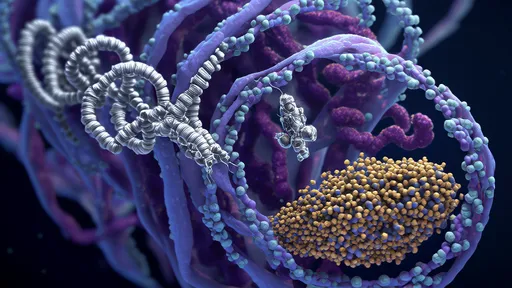
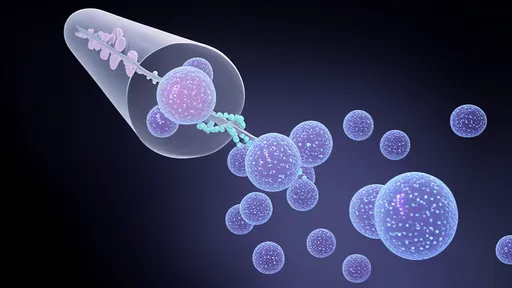
Using super-resolution microscopy and optogenetic tools in human cell lines, scientists observed how key regulatory proteins coalesce into liquid-like droplets near the centrosome during late G2 phase. "These aren't passive aggregates," explains lead author Dr. Helena Varela. "The droplets exhibit properties of a non-equilibrium system—constantly exchanging components with their surroundings while performing logical operations akin to a biological computer."
The team identified a core set of phase-separating proteins including CDK1, PP2A phosphatase, and the Aurora A kinase activator TPX2. These components form an excitable network where concentration thresholds trigger rapid dissolution or growth of the condensates. Computational modeling suggests this system implements a type of "integrate-and-fire" mechanism, similar to neuronal signaling but operating through phase transitions rather than ion fluxes.
Breaking the symmetry of time
What makes this discovery particularly fascinating is how the droplets solve a fundamental timing problem. Classical biochemical oscillations (like the circadian clock) rely on negative feedback loops with inherent delays. The phase separation system, however, can generate ultra-sharp transitions without such delays by exploiting collective interactions between thousands of molecules.
"It's like comparing an hourglass to a stopwatch," says senior author Prof. Rajiv Desai. "The droplet system doesn't just measure time—it actively computes when conditions are right for division by processing multiple inputs simultaneously: cell size, DNA integrity, nutrient status." This explains how cells can make all-or-nothing decisions about entering mitosis within minutes, despite the gradual accumulation of cyclins over hours.
The researchers demonstrated this by artificially manipulating droplet formation. When they prevented phase separation using mutations or small molecules, cells showed erratic timing—some entering mitosis prematurely while others became stuck in G2. Conversely, forcing premature droplet assembly triggered early mitotic entry even without complete cyclin B-CDK1 activation.
Implications for disease and evolution
This mechanism may explain why certain cancer mutations cluster in intrinsically disordered regions (IDRs) of cell cycle proteins—regions critical for phase separation but often overlooked in traditional analyses. The study found that common oncogenic mutations in TPX2 and PP2A subunits disrupt normal droplet dynamics, leading to uncontrolled proliferation.
Evolutionarily, the system appears to have emerged as a solution to scaling problems. Single-celled organisms like yeast rely more on sequential phosphorylation cascades. But as eukaryotic cells grew larger and more complex, the spatial coordination afforded by phase separation may have become essential. The team discovered homologous droplet systems in zebrafish embryos and mouse epithelial tissues, suggesting deep conservation.
Several unanswered questions remain. How exactly do the droplets avoid becoming nucleation points for harmful aggregates? What role do post-translational modifications play in tuning droplet properties? And can this system be hacked to artificially control cell division in regenerative medicine?
Biotech companies are already exploring applications. Phase separation modulators could offer a new class of anti-mitotic drugs with fewer side effects than traditional microtubule poisons. Other groups are engineering synthetic droplet systems to create programmable cellular timers for biotechnology.
As Dr. Varela reflects: "We've long treated the cell as a bag of enzymes. But seeing how it uses physics to perform computations—this changes what it means to understand biological decision-making." The study not only rewrites textbook models of cell cycle control but blurs the line between computation and chemistry in living systems.

By /Aug 18, 2025
By /Aug 18, 2025

By /Aug 18, 2025
By /Aug 18, 2025
By /Aug 18, 2025

By /Aug 18, 2025

By /Aug 18, 2025
By /Aug 18, 2025
By /Aug 18, 2025
By /Aug 18, 2025

By /Aug 18, 2025
By /Aug 18, 2025

By /Aug 18, 2025

By /Aug 18, 2025

By /Aug 18, 2025

By /Aug 18, 2025
By /Aug 18, 2025

By /Aug 18, 2025
By /Aug 18, 2025
By /Aug 18, 2025
