The silent vacuum of space has become an unlikely nursery for the next generation of super crops. Over the past decade, Chinese and international scientists have been conducting radical experiments by sending seeds into orbit, exposing them to cosmic radiation, microgravity, and extreme temperature fluctuations. The results now coming back to Earth could revolutionize global agriculture.
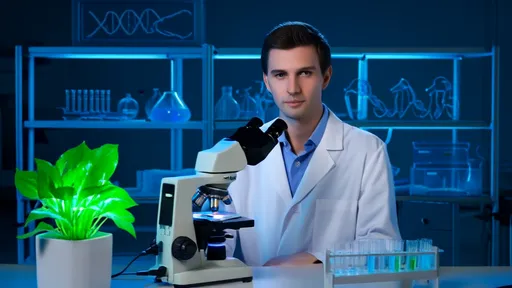
Unlike the sterile laboratories where most genetic research occurs, space serves as nature’s most unpredictable mutagen. Satellite payloads containing rice, wheat, and vegetable seeds endure conditions impossible to replicate on Earth. "It’s like throwing seeds into a particle accelerator and waiting to see what survives," remarks Dr. Lena Kowalski, a biophysicist who collaborated on the Sino-European Tiangong experiments. The mutations occur randomly but at rates thousands of times higher than conventional radiation breeding.
Last month’s harvest of space-bred tomatoes at Shandong Agricultural University demonstrated the staggering potential. After three orbital cycles aboard China’s space station, the cherry tomato variant "Stellar Ruby" now yields 40% more fruit while requiring 30% less water. More remarkably, the plants exhibit unprecedented resistance to fusarium wilt, a fungal disease that costs growers billions annually. Field tests show these traits remain stable across four generations.
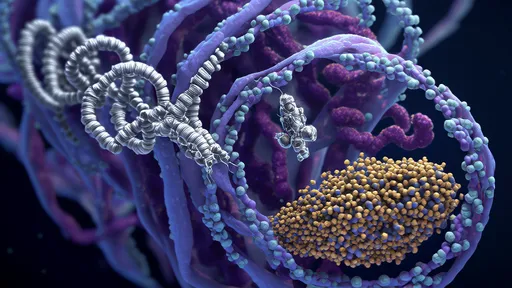
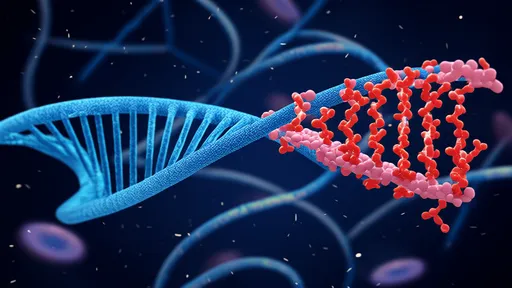
The mechanism behind these transformations remains partially enigmatic. Cosmic rays appear to trigger complex chromosomal rearrangements rather than simple point mutations. Professor Chen Guanghui’s team at the Chinese Academy of Agricultural Sciences discovered that space-exposed rice developed novel promoter regions – genetic switches that activate drought-response genes. "These aren’t GMOs in the traditional sense," Chen emphasizes. "We’re allowing cosmic forces to rewrite the playbook of plant evolution."
Controversy swirls around the regulatory status of space-mutated crops. Unlike gene-edited organisms, these varieties contain no foreign DNA, yet their mutations dwarf anything seen in nature. The European Food Safety Authority recently classified them under "novel genomic foods," requiring stringent testing. Meanwhile, China has fast-tracked fourteen space-bred crop varieties for commercial use, including the "Jade Orbit" lettuce now served in Beijing’s high-end restaurants.
Economic implications are profound. A single gram of space-mutated wheat seeds can sell for over $300 at agricultural auctions. Private companies like Orbital Harvest have begun offering "seed irradiation as a service," launching customer-provided seeds on suborbital rockets. Critics warn of a speculative bubble, noting that fewer than 5% of space-exposed seeds develop commercially viable traits. Yet with climate change decimating traditional crops, the gamble appears increasingly justified.
The next frontier involves combining space mutagenesis with CRISPR technology. Researchers at Kenya’s International Centre of Insect Physiology and Ecology report startling success with space-hardened sorghum that repels stem borers. By identifying which cosmic-induced mutations confer pest resistance, they’ve begun editing those markers into ground-based seeds. This hybrid approach may democratize benefits currently accessible only to spacefaring nations.
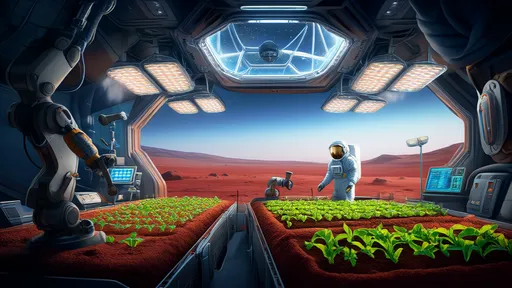
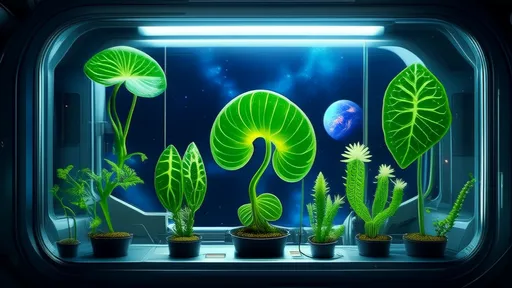
As lunar agriculture experiments commence aboard China’s newly launched Mengzhou spacecraft, the line between science fiction and agronomy blurs. The crops returning from these missions won’t just feed populations – they’ll challenge our very understanding of how life adapts beyond Earth. What began as a Cold War curiosity has blossomed into perhaps the most promising tool for nourishing humanity’s future.
By /Aug 18, 2025
By /Aug 18, 2025

By /Aug 18, 2025
By /Aug 18, 2025

By /Aug 18, 2025
By /Aug 18, 2025

By /Aug 18, 2025

By /Aug 18, 2025
By /Aug 18, 2025
By /Aug 18, 2025

By /Aug 18, 2025
By /Aug 18, 2025
By /Aug 18, 2025
By /Aug 18, 2025

By /Aug 18, 2025
By /Aug 18, 2025
By /Aug 18, 2025

By /Aug 18, 2025

By /Aug 18, 2025

By /Aug 18, 2025
