UAE Pledges Equal Investment in the US

Oct 11, 2025 By

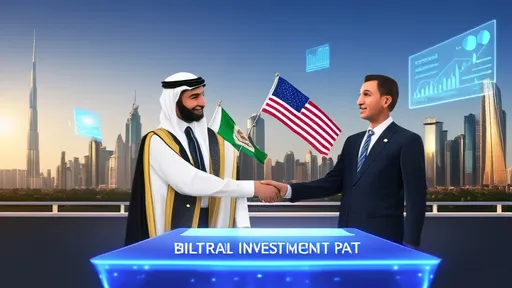
The recent AI partnership agreement between the United States and the United Arab Emirates represents a landmark moment in technological diplomacy, setting the stage for unprecedented economic and strategic collaboration. At the heart of this agreement lies a remarkable commitment from the UAE to match American investments in artificial intelligence with equivalent capital deployment within US borders. This arrangement transcends traditional trade agreements, creating a symbiotic relationship where technological advancement and economic growth become mutually reinforcing objectives for both nations.


The geopolitical landscape has been shifting dramatically as nations recognize artificial intelligence as the next frontier of global influence. What makes this US-UAE agreement particularly noteworthy is its departure from conventional technology transfer models. Rather than simply sharing research or establishing joint ventures, the UAE has committed to a dollar-for-dollar investment strategy that will see substantial Emirati capital flowing into American AI infrastructure, research institutions, and commercial enterprises. This approach demonstrates a sophisticated understanding of how to build sustainable technological partnerships in the twenty-first century.


Economic implications of this arrangement extend far beyond the immediate injection of capital into the American technology sector. The UAE's commitment to equivalent investment creates a powerful economic feedback loop. As American companies and research institutions receive funding from both domestic and Emirati sources, they can accelerate development timelines, attract additional private investment, and scale operations more rapidly. This dual-stream funding approach effectively doubles the financial firepower available for critical AI initiatives that might otherwise progress at a slower pace due to funding constraints.


Industry analysts have been particularly impressed by the strategic foresight embedded within the agreement's structure. The UAE brings to the table not just capital but also unique perspectives on AI application in diverse environments, from smart city management to energy optimization. Meanwhile, the United States offers world-leading research capabilities and a mature innovation ecosystem. The combination creates a partnership where both nations can leverage their distinctive strengths while addressing their respective weaknesses through collaborative effort.


The timing of this agreement reflects careful strategic calculation by both nations. With China rapidly advancing its AI capabilities and Europe developing its own regulatory framework, the US-UAE partnership establishes a powerful counterbalance in the global AI landscape. For the United States, it ensures continued leadership in AI development while distributing the financial burden of large-scale research and infrastructure projects. For the UAE, it provides access to cutting-edge technology and expertise that would take decades to develop independently, accelerating their transition to a knowledge-based economy.


What distinguishes this agreement from previous international technology partnerships is its emphasis on reciprocal benefit rather than one-sided advantage. The UAE's commitment to equivalent investment ensures that American communities will see tangible economic benefits from the partnership, potentially creating jobs, stimulating local economies, and fostering innovation hubs across the country. This approach helps mitigate political opposition that sometimes arises when foreign investment is perceived as extracting more value than it contributes.


The implementation framework establishes clear guidelines for investment distribution across multiple sectors. Rather than concentrating funds in a single area, the agreement encourages diversified investment across fundamental research, applied technology development, workforce training, and infrastructure projects. This comprehensive approach recognizes that AI advancement depends on multiple interconnected components, from theoretical breakthroughs to practical implementation and skilled personnel to operate the systems.


Critically, the agreement includes provisions for knowledge sharing and collaborative research that will benefit both nations. American researchers will gain insights from UAE-led projects in areas like desert technology adaptation and resource optimization, while Emirati scientists will participate in advanced AI research at American institutions. This two-way exchange of expertise creates a richer innovation ecosystem than either country could develop independently, potentially leading to breakthroughs that might not emerge within isolated research environments.


National security considerations have been carefully addressed within the agreement's framework. While promoting open collaboration in most AI domains, the partnership establishes clear protocols for protecting sensitive technologies with defense applications. This balanced approach allows for robust cooperation in civilian AI applications while maintaining appropriate safeguards for technologies critical to national security. The nuanced handling of this sensitive issue demonstrates the diplomatic sophistication behind the agreement.


The long-term implications of this partnership extend beyond the immediate economic and technological benefits. By establishing a model for international AI collaboration based on mutual investment and shared benefit, the US and UAE are creating a template that other nations may follow. This could potentially reshape how countries approach technological cooperation in the AI era, moving away from zero-sum competition toward collaborative models that accelerate progress while distributing benefits more broadly.


Regional dynamics in the Middle East add another layer of strategic significance to this agreement. The UAE's deepening technological partnership with the United States strengthens its position as a regional innovation hub while reinforcing American influence in a strategically vital part of the world. Other Gulf nations will likely observe the outcomes of this partnership closely, potentially leading to similar arrangements that could further integrate the region into the global AI innovation network.


Implementation of the agreement will require careful coordination between government agencies, research institutions, and private sector entities in both countries. Early indications suggest that both nations are establishing dedicated task forces to oversee the partnership's execution, ensuring that investments align with strategic priorities and deliver measurable results. This structured approach to implementation increases the likelihood that the partnership will achieve its ambitious goals rather than becoming another high-level agreement that fails to translate into concrete outcomes.


The human capital dimension of this partnership deserves particular attention. Beyond financial investments, the agreement includes provisions for educational exchanges, joint training programs, and collaborative research opportunities that will develop the next generation of AI talent in both nations. This focus on human development ensures that the partnership builds capacity that will endure beyond specific projects or funding cycles, creating a foundation for sustained collaboration and innovation.


As with any major international agreement, challenges remain in implementation. Differences in regulatory approaches, intellectual property protection, and cultural working styles will need to be navigated carefully. However, the structured framework established by the agreement, combined with the strong bilateral relationship between the US and UAE, provides a solid foundation for addressing these challenges as they arise.


The business community on both sides has responded positively to the agreement's announcement. American technology companies see opportunities for expanded funding sources and access to new markets, while Emirati businesses anticipate gaining technological capabilities that will enhance their competitiveness globally. This private sector enthusiasm is crucial for translating the government-level agreement into tangible commercial applications and economic growth.


Looking forward, the success of this partnership will be measured not just by the volume of investments made but by the technological breakthroughs achieved and the economic value created. If implemented effectively, it could serve as a model for how nations can collaborate on critical technologies in an increasingly competitive global landscape. The US-UAE AI partnership represents a bold experiment in international technological cooperation, one that could significantly influence how nations approach AI development in the coming decades.


Ultimately, this agreement reflects a sophisticated understanding of how technological leadership is built in the twenty-first century. Rather than pursuing isolationist policies or engaging in zero-sum competition, the United States and United Arab Emirates have chosen a path of collaborative advancement. Their approach recognizes that in the complex field of artificial intelligence, partnership and shared investment may prove more effective than going it alone. The world will be watching closely as this ambitious partnership unfolds, potentially charting a new course for international technological collaboration.


Recommend Posts
Business

The Game Behind Chip Export Agreements: Balancing National Security and Global Technology Strategy

By /Oct 11, 2025

The global semiconductor landscape has become the latest theater for geopolitical maneuvering, where nations navigate the delicate intersection of national security imperatives and technological interdependence. Recent export control agreements have revealed the complex calculus behind what appears to be straightforward trade regulations. Behind closed doors, government officials and industry leaders engage in sophisticated negotiations that will ultimately shape the future of global technological supremacy.
Business

Former Google CEO Schmidt Warns of AI Proliferation Risks and Potential Dangers

By /Oct 11, 2025

Former Google CEO Eric Schmidt has issued a stark warning about the rapid proliferation of artificial intelligence technologies, cautioning that the uncontrolled spread of AI capabilities poses significant risks to global security and stability. Speaking at a recent technology summit in Washington, the influential tech leader emphasized that while AI development brings tremendous benefits, its potential for harm grows exponentially as the technology becomes more accessible.
Business

US Approves Chip Exports on Condition: UAE Must Develop Specific Investment Plans in the US

By /Oct 11, 2025

The geopolitical chessboard of semiconductor technology witnessed a significant development this week as the United States granted export licenses for advanced chips to the United Arab Emirates, marking a pivotal moment in the strategic alignment between the two nations. This authorization, however, came with a critical precondition that underscores a fundamental shift in how Washington approaches technology transfer and foreign investment. The UAE was required to present a detailed, binding investment blueprint specifically targeting the American semiconductor ecosystem, a move that analysts are calling a new paradigm in tech-driven diplomacy.
Business

Currency Swaps and Market Interventions: Financial Support from Developed to Emerging Economies

By /Oct 11, 2025

In the intricate web of global finance, the mechanisms of support between developed and emerging economies have evolved significantly. Among the most critical, yet often understated, tools are central bank currency swaps and strategic market interventions. These instruments have moved from the periphery of economic discourse to the center stage, especially during periods of global financial stress. They represent not just technical financial operations, but a profound commitment to international monetary stability.
Business

Traditional Automakers Face Hurdles in Electrification Transition, Reflected in Ferrari's Stock Price Adjustment

By /Oct 11, 2025

Ferrari's stock performance has become a barometer for investor sentiment toward the auto industry's electric transition, reflecting a market increasingly skeptical of the smooth, inevitable shift that manufacturers have promised for years. While legacy automakers from Detroit to Stuttgart struggle with the practical realities of electrification, the Italian supercar manufacturer's shares have experienced significant volatility as investors recalibrate expectations about what the electric future truly means for different segments of the automotive landscape.
Business

FTAs and Investment Agreements: National Strategies in the Restructuring of the Global Economic Landscape

By /Oct 11, 2025

In the evolving tapestry of global economic relations, free trade agreements and investment pacts have emerged as critical instruments shaping national strategies. As countries navigate the complexities of post-pandemic recovery and geopolitical realignments, these agreements are no longer mere facilitators of commerce but strategic tools in the great power competition of our time.
Business

UAE AI Strategy Core: 5 Billion Watt Data Center and OpenAI Collaboration

By /Oct 11, 2025

The United Arab Emirates has unveiled a groundbreaking artificial intelligence initiative that positions the nation at the forefront of the global technology landscape. In a strategic move that combines infrastructure development with international partnership, the UAE announced plans to establish a massive 50-gigawatt data center facility while simultaneously forging a landmark collaboration with OpenAI, the pioneering artificial intelligence research laboratory.
Business

Trump Administration Approves Nvidia's AI Chip Sale to Gulf Countries for the First Time

By /Oct 11, 2025

The Trump administration has quietly approved Nvidia's first major artificial intelligence chip exports to Gulf nations, marking a significant shift in technology transfer policies that could reshape global AI development landscapes. This decision comes after months of delicate negotiations and represents a strategic move to strengthen technological partnerships with key Middle Eastern allies while maintaining competitive advantages in the rapidly evolving AI sector.
Business

US Commerce Department Grants NVIDIA Export License to UAE under May Agreement

By /Oct 11, 2025

The United States Department of Commerce has granted Nvidia a significant export license to the United Arab Emirates, marking a pivotal development in global technology trade under the May Agreement framework. This authorization comes at a time of heightened scrutiny over semiconductor exports and represents a carefully calibrated decision that balances economic interests with national security considerations.
Business

NVIDIA Plans Up to $100 Billion Investment in OpenAI, Setting a Record for Largest Hand Gesture

By /Oct 11, 2025

In a move that has sent shockwaves through the technology and financial sectors, NVIDIA, the undisputed titan of artificial intelligence computing, is reportedly in advanced discussions to make a staggering $100 billion investment into OpenAI. This monumental sum, if finalized, would represent the single largest private investment in the history of the technology industry, dwarfing previous mega-deals and fundamentally reshaping the landscape of AI development. The news, first broken by sources close to the negotiations, suggests a strategic gambit of unprecedented scale, positioning NVIDIA not just as a supplier of the essential hardware for the AI revolution, but as a core architect of its future.
Business

AI Video Competition Shifts to Ecosystem and Creator Competition from Quality Comparison

By Ryan Martin/Oct 11, 2025

The landscape of AI video generation is undergoing a profound transformation. For years, the industry's primary focus has been a relentless, almost obsessive, race toward photorealism and technical perfection. The conversation was dominated by metrics: resolution, frame consistency, the uncanny valley. We asked, "Can the AI make a video that looks real?" Now, a more complex and strategically significant question is emerging: "What can creators *do* with it?" The battlefield is shifting from the raw technical specs of the generated clip to the richness of the ecosystem that surrounds it.
Business

U.S. Treasury Secretary Bentson: Treasury Has Bought Argentine Pesos to Stabilize the Market

By /Oct 11, 2025

In a move that caught global financial markets by surprise, US Treasury Secretary Janet Yellen confirmed early Tuesday that the Treasury Department has initiated direct purchases of Argentine pesos as part of an emergency stabilization effort. The unprecedented intervention comes as Argentina's currency crisis threatens to spill over into emerging markets and potentially impact global financial stability.
Business

U.S. and Argentina Finalize $20 Billion Currency Swap Framework

By /Oct 11, 2025

The United States and Argentina have finalized a landmark $20 billion currency swap framework, marking a significant development in international financial cooperation and signaling a strategic shift in economic alliances. The agreement, negotiated over several months amid global economic turbulence, establishes a crucial financial safety net for Argentina as it navigates complex debt restructuring processes and persistent inflationary pressures. This arrangement represents one of the largest bilateral currency swap lines established by the United States with a Latin American nation in recent decades, underscoring the growing importance of emerging markets in global financial stability mechanisms.
Business

UAE Pledges Equal Investment in the US

By /Oct 11, 2025

The recent AI partnership agreement between the United States and the United Arab Emirates represents a landmark moment in technological diplomacy, setting the stage for unprecedented economic and strategic collaboration. At the heart of this agreement lies a remarkable commitment from the UAE to match American investments in artificial intelligence with equivalent capital deployment within US borders. This arrangement transcends traditional trade agreements, creating a symbiotic relationship where technological advancement and economic growth become mutually reinforcing objectives for both nations.
Business

Facing US Tariff Risks, UK and India Leaders Seek to Deepen Bilateral Business Ties

By /Oct 11, 2025

British Prime Minister Rishi Sunak and Indian Prime Minister Narendra Modi have accelerated negotiations for a comprehensive free trade agreement as both nations seek to counterbalance growing economic uncertainties triggered by U.S. tariff policies. The strategic move comes amid escalating trade tensions between Western allies and Washington, with recent tariff hikes on steel, aluminum, and clean energy imports creating ripple effects across global supply chains.
Business

Global AI Infrastructure Competition Heats Up, Chips and Data Centers Become Key Bargaining Chips

By /Oct 11, 2025

The global race for AI infrastructure is accelerating at a pace that has caught even the most optimistic industry observers by surprise. What began as a technological competition has evolved into a full-scale geopolitical struggle, with nations and corporations pouring unprecedented resources into building the computational backbone required to dominate the artificial intelligence era. At the heart of this contest lie two critical components: advanced semiconductors and massive-scale data centers. These are not merely elements of technological infrastructure; they have become the fundamental chips up on which future economic and strategic power will be built.
Business

OpenAI Complains of Difficulties Competing with Established Companies, Urges EU Intervention

By /Oct 11, 2025

In the hushed corridors of Brussels, where European Union regulators deliberate the future of artificial intelligence, an unlikely voice has joined the chorus of established tech giants. OpenAI, the organization behind the revolutionary ChatGPT, has raised concerns about competing with what it describes as "entrenched players" in the market. This appeal for regulatory intervention marks a significant shift for a company once seen as a disruptive force, now positioning itself as an underdog in need of protection.
Business

NVIDIA's Overseas Sales Face Increased Scrutiny from US Government, AI Technology Control Becomes a Focus

By /Oct 11, 2025

The global technology landscape finds itself at a critical juncture as the United States government intensifies its scrutiny of NVIDIA Corporation's overseas sales, particularly those involving advanced artificial intelligence chips. This heightened oversight represents a significant escalation in the ongoing technological cold war between superpowers, with AI supremacy emerging as the central battlefield. The implications stretch far beyond corporate earnings reports, touching upon fundamental questions of national security, economic competitiveness, and the future balance of global power.
Business

Hainan Actively Promotes the Consume Expo Platform, Expands Global Influence through the Free Trade Zone Conference

By /Oct 11, 2025

Beneath the tropical sun, a quiet revolution is unfolding across Hainan's palm-fringed shores. The island province, once celebrated primarily for its azure waters and luxury resorts, is now emerging as a dynamic nexus of global commerce. At the heart of this transformation are two powerful engines: the China International Consumer Products Expo (CICPE), or the Hainan Expo, and the Boao Forum for Asia Annual Conference. These events are not merely calendar fixtures; they are strategic instruments through which Hainan is amplifying its voice on the world stage, leveraging its unique status as China's only free trade port to craft a new narrative of international engagement.
Business

NVIDIA Invests $2 Billion in Musk's Neuralink, Huang Renxun Expresses Excitement

By /Oct 11, 2025

In a move that sent shockwaves through the technology and investment communities, NVIDIA, the undisputed leader in artificial intelligence computing, has announced a staggering $2 billion strategic investment in xAI, the ambitious artificial intelligence venture founded by tech maverick Elon Musk. The announcement, made jointly by both companies on Tuesday, represents one of the most significant financial endorsements in the nascent field of advanced AI and signals a powerful alliance between two of the most influential figures in modern technology.